


Introduction
Perimeter security is evolving rapidly, with advanced technologies providing higher accuracy, reliability, and efficiency than ever before. One of the most promising innovations is digital beamforming in solid-state radar systems perimeter surveillance radar. This technology allows precise control over radar beams, offering enhanced detection, tracking, and situational awareness. Understanding digital beamforming highlights why it is poised to redefine modern perimeter surveillance.
What Is Digital Beamforming?
Digital beamforming (DBF) is a method of electronically controlling the direction and shape of radar beams using signal processing algorithms rather than mechanical movement. By adjusting the phase and amplitude of signals across multiple antenna elements, DBF can focus radar energy on specific areas, scan multiple directions simultaneously, and track multiple targets at once. Unlike traditional mechanically scanned radar, DBF offers flexibility, speed, and precision with no moving parts.
Advantages of Digital Beamforming in Perimeter Security
High-Resolution Detection
DBF enables the radar to form narrow, focused beams, increasing spatial resolution. This allows detection of smaller objects, fine movements, or partially obscured intruders, improving overall security coverage.
Simultaneous Multi-Target Tracking
Traditional radars scan sequentially, limiting their ability to track multiple targets simultaneously. DBF can monitor several targets in real-time, assigning priority and providing operators with continuous situational awareness across large perimeters.
All-Weather, All-Light Operation
Like other radar technologies, DBF systems are unaffected by fog, rain, snow, or darkness. Their solid-state design eliminates mechanical failures, while digital processing ensures accurate detection under all environmental conditions.
Reduced False Alarms
By precisely shaping beams and focusing on specific areas, DBF minimizes detection of irrelevant movement such as swaying trees or wildlife. Combined with AI analytics, this significantly reduces false alarms and ensures security teams respond to genuine threats.
Flexibility and Scalability
Digital beamforming allows dynamic adjustment of coverage areas without physically repositioning antennas. Perimeter zones can be prioritized, zoomed in, or expanded digitally, enabling scalable and adaptable surveillance for changing security needs.
Applications of Digital Beamforming Radar
- Critical Infrastructure: Airports, power stations, and government facilities benefit from high-precision monitoring and multi-target tracking.
- Industrial Sites: Factories, ports, and large campuses gain enhanced situational awareness across extensive areas.
- Urban Perimeters: Complex environments with multiple levels, obstacles, or high-density activity are effectively monitored.
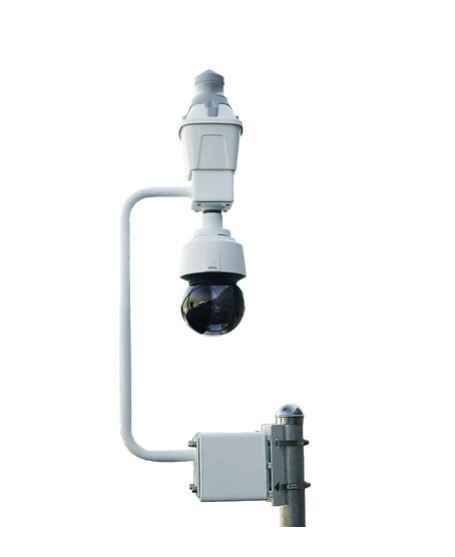
- Integration with PTZ Cameras and Analytics: DBF can cue cameras and feed target data into AI systems for classification, identification, and automated alerts.
Solid-State Reliability
Unlike mechanically scanned radar, solid-state DBF systems have no moving parts, which reduces maintenance, increases durability, and ensures consistent operation. Their compact and modular design allows easy deployment in diverse environments, from open fields to rooftop installations.
Conclusion
Digital beamforming represents the future of perimeter surveillance, combining precision, flexibility, and reliability in a single solid-state system. By electronically steering beams, tracking multiple targets, and operating effectively under all weather and lighting conditions, DBF enhances detection accuracy and situational awareness. As AI integration and solid-state design continue to advance, digital beamforming radar will become an indispensable tool for modern security operations, delivering smarter, faster, and more dependable perimeter protection.
