


In the world of heavy infrastructure and highway safety, the success of a project often hinges on the accuracy of its logistical specifications. While many see concrete walls as simple physical blocks, engineers understand that every inch of their geometry is dictated by decades of crash-test data and safety regulations. For project managers coordinating tight work zones or narrow roadway detours, understanding specific jersey barrier dimensions is not just about fitting equipment into a space—it is about ensuring the structural integrity of a safety perimeter. The “Type 1” 8-foot barrier has emerged as one of the most versatile units in the industry, offering a balance of substantial mass and maneuverability that fits a wide range of municipal and commercial applications.
The Anatomy of a Type 1 Barrier
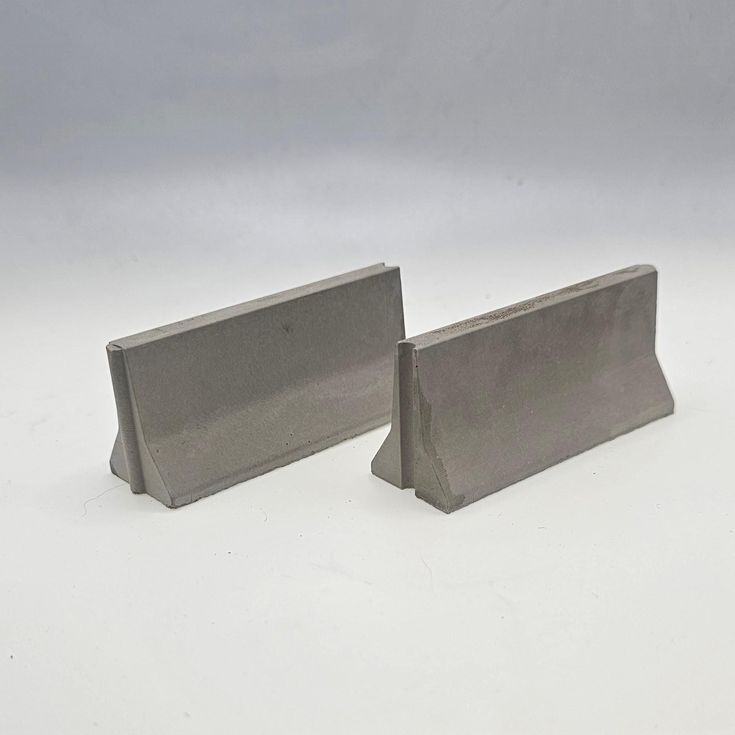
A standard 8-foot Jersey barrier is engineered with a very specific profile to prevent vehicle “vaulting” or rollover. While lengths can vary, the standard height and base width are critical for maintaining the barrier’s center of gravity. Typically, a Type 1 barrier stands 32 inches high with a base width of 24 inches.
The design features a “toe” (the lowest part of the barrier) that measures approximately 3 inches in height. This is followed by a sloped “ramp” section that leads to the vertical face. This exact geometry is what allows the barrier to redirect a vehicle’s tires upward, absorbing kinetic energy through the suspension rather than through a blunt impact with the engine block. If these dimensions are off by even a few inches, the barrier may fail to redirect the vehicle properly, leading to a catastrophic breach of the work zone.
Optimizing Site Footprint and Logistics
One of the primary reasons contractors choose the 8-foot length over larger 10-foot or 12-foot sections is the limitation of the job site. In dense urban environments where lane widths are restricted, the footprint of the barrier is a major factor.
- Tighter Radii: Shorter 8-foot sections allow for more gradual curves in a barrier wall. This is essential for creating detours around circular construction sites or navigating winding mountain roads where longer sections would be impossible to align.
- Weight Management: An 8-foot concrete barrier typically weighs approximately 3,200 lbs. While still immensely heavy, this weight allows for a wider range of mid-sized forklifts and skid steers to manage the placement, whereas 12-foot units often require specialized heavy-duty cranes or large-scale loaders.
- Transport Efficiency: Understanding the dimensions allows for precise flatbed loading. A standard 48-foot trailer can accommodate six 8-foot units perfectly, maximizing the “linear footage” per shipment and reducing overall fuel and transport costs.
Structural Reinforcement and Durability
Beyond the external dimensions, the internal composition of a Type 1 barrier is what provides its longevity. High-quality barriers are cast using 4,000 PSI concrete and reinforced with a cage of steel rebar. This internal skeleton ensures that even if the concrete surface chips or weathers over years of exposure to road salt and freezing cycles, the barrier retains its structural mass and shape.
For permanent installations—such as protecting fuel depots, power substations, or government parking structures—the durability of reinforced concrete is unmatched. It provides a “Target Hardening” solution that requires zero maintenance once placed, unlike water-filled plastic alternatives that must be monitored for leaks or UV degradation.
Regulatory Compliance and Safety Standards
In the United States, barrier dimensions are often dictated by state Departments of Transportation (DOT) and Federal Highway Administration (FHWA) standards. Using barriers that deviate from these established dimensions can result in significant liability for a contractor if an accident occurs. Professional-grade concrete units are manufactured to meet these specific “New Jersey Shape” requirements, ensuring that the barrier will perform exactly as predicted during a high-speed impact.
Conclusion: Engineering a Safer Perimeter
Effective site management is the result of choosing the right tool for the specific environmental constraints. By paying close attention to the dimensions and weight classes of your safety hardware, you can ensure a site that is both compliant with safety regulations and optimized for logistical efficiency. Whether you are protecting a high-speed highway crew or securing a municipal facility, the equipment you choose is the foundation of your safety protocol.
For contractors and agencies who refuse to compromise on quality, Epic Crowd Control offers the professional-grade infrastructure solutions needed to secure any environment. Investing in precision-engineered concrete barriers is the most reliable way to ensure that your project remains secure, your staff remains protected, and your logistics remain on schedule.
