


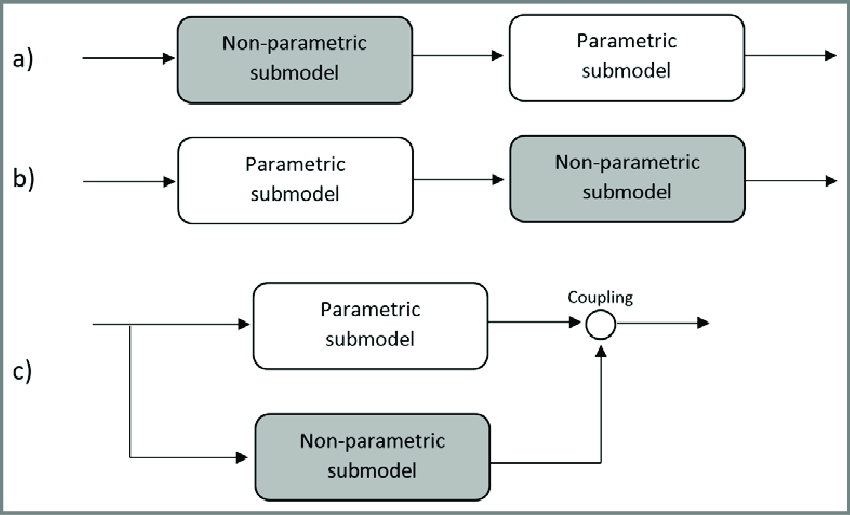
Imagine a jazz band where a pianist follows sheet music note-for-note while the saxophonist improvises freely, bending melodies and rhythms at will. The performance is neither fully scripted nor entirely spontaneous—it’s a dance between structure and creativity. In the world of statistical modelling, semiparametric models play a similar tune. They combine the rigid framework of parametric models with the free-flowing adaptability of non-parametric methods, producing results that are both interpretable and flexible. This elegant balance makes them a favourite tool among modern analysts and an exciting topic for learners enrolled in a Data Scientist course in Coimbatore.
The Two Worlds: Parametric and Non-Parametric
Before understanding the harmony of semiparametric models, let’s first visit their two parent worlds. Parametric models, like linear regression, rely on strong assumptions about data—defining its shape through parameters such as slope and intercept. They’re efficient and transparent, much like following a musical score. However, their rigidity often limits expression, making the melody sound the same, even when the audience changes.
Non-parametric models, on the other hand, resemble improvisational performances. They don’t assume a fixed form and can adapt to complex data patterns. But this freedom comes at a cost: without constraints, they may overfit, capturing noise rather than proper rhythm. Semiparametric models emerge as the bridge—borrowing discipline from one world and creativity from the other, offering a perfect balance between control and flexibility.
Where Structure Meets Adaptability
Consider a real-world example: predicting how income changes with age. A purely parametric model might assume a neat linear or quadratic relationship—simple, but often unrealistic. A non-parametric model could trace every twist and turn of the data, but risk misinterpreting random fluctuations as meaningful.
A semiparametric model steps in as a wise mediator. It allows part of the relationship (say, the effect of education or gender) to remain parametric—defined and interpretable—while the age-related component is modelled non-parametrically, bending naturally to the data’s rhythm. This dual nature lets analysts capture nuanced, non-linear effects while maintaining interpretability for policy or business decisions. Students in a Data Scientist course in Coimbatore learn how this balance provides both the stability of classical statistics and the adaptability demanded by modern data.
The Power Behind the Approach
At the heart of semiparametric modelling lies the notion of partial specification. By constraining only certain aspects of the model, analysts preserve interpretability where it matters—coefficients still have precise meanings—while letting the rest of the model breathe freely. For instance, in a partially linear model, one might write:
Y = Xβ + g(Z) + ε,
Where Xβ represents the parametric part (like income explained by years of experience), g(Z) is an unknown smooth function capturing complex effects (say, the influence of age or lifestyle), and ε is the error.
This approach is compelling in economics, healthcare, and environmental science, where relationships are rarely linear or completely unpredictable. By combining the best of both paradigms, semiparametric models act as a translator between theoretical understanding and empirical complexity.
Practical Use Cases and Modern Relevance
Semiparametric methods have found their way into several frontier applications. In survival analysis, they underpin the famous Cox proportional hazards model, helping researchers understand factors influencing patient longevity without rigidly assuming how time affects risk. In econometrics, they model wage equations where education and experience exert both predictable and flexible effects. In machine learning, hybrid models are informed that combine neural networks with classical regression layers, striking a balance between interpretability and accuracy.
The increasing popularity of semiparametric methods stems from their compatibility with the data-rich but assumption-averse era of modern analytics. They embody the philosophy that models should guide without dictating, learn without memorising, and explain without oversimplifying.
Why They Matter in Today’s Data Landscape
In a world flooded with complex, high-dimensional data, the ability to model relationships that are partly understood and partly mysterious is invaluable. Semiparametric models serve as a reminder that data analysis is both a science and an art. They encourage humility—accepting that not every relationship can be precisely described—and curiosity—to explore patterns without losing interpretability.
For aspiring professionals, mastering these models is more than a technical milestone; it’s a mindset. It means learning to question assumptions, recognise patterns, and design solutions that are as adaptable as the data they model. This philosophy, often emphasised in advanced analytics training, transforms learners into data storytellers rather than mere number crunchers.
Conclusion
Semiparametric models represent the sweet spot where order meets intuition. They’re the jazz musicians of the modelling world, blending the predictability of structure with the magic of improvisation. By combining parametric precision with non-parametric freedom, they offer analysts a framework that mirrors the real world—structured in parts, fluid in others, and endlessly fascinating.
As the boundaries between classical statistics and modern machine learning continue to blur, semiparametric thinking stands as a bridge—a reminder that balance, not extremes, often leads to the most elegant solutions. For anyone passionate about uncovering patterns in data, understanding semiparametric models isn’t just an academic exercise—it’s a lesson in harmony, adaptability, and creative reasoning.
