


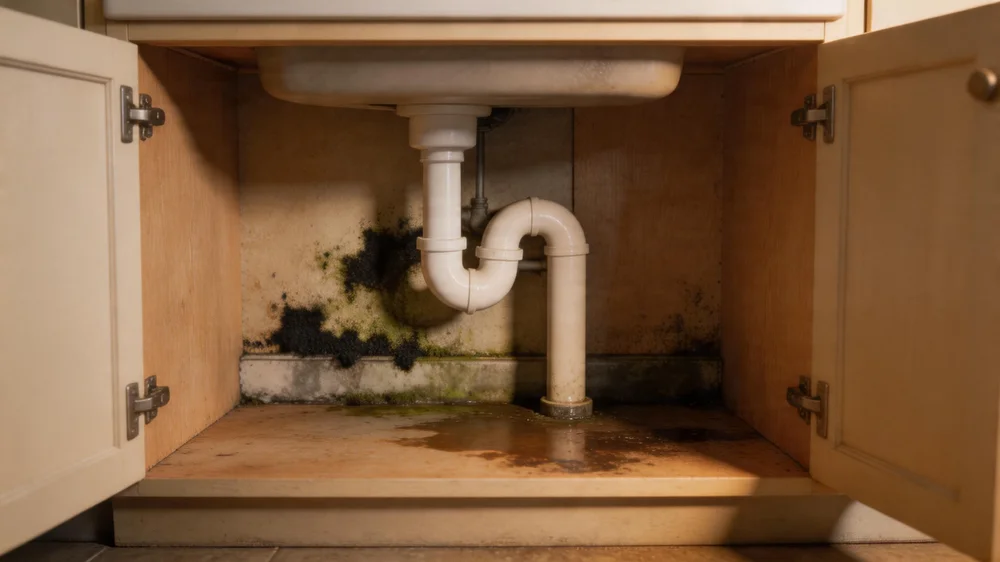
Finding mold under a kitchen or bathroom sink can be an unpleasant surprise. Because the area beneath a sink is often dark, enclosed, and exposed to moisture, it provides favorable conditions for mold growth. A small plumbing leak, condensation, poor ventilation, or unnoticed water damage can allow mold to develop behind stored items, along cabinet walls, and around pipes.
Although a small patch may not initially seem serious, ignoring it can lead to further property damage, persistent musty odors, and potential health concerns. Knowing what to do when mold appears beneath a sink can help homeowners address the problem safely and prevent it from returning.
Identify the Source of Moisture
The first step is to determine why mold has developed. Mold needs moisture to grow, so removing visible mold without correcting the underlying water problem is unlikely to provide a lasting solution.
Inspect the plumbing connections, drainpipes, water supply lines, and faucet connections for leaks. Look for dripping water, loose fittings, damaged seals, and signs of condensation. Even a slow leak can keep the cabinet damp enough to encourage mold growth.
Check the cabinet floor and surrounding walls for water stains, swollen wood, peeling surfaces, or soft spots. If moisture is coming from a hidden pipe or wall cavity, professional inspection may be necessary to identify the exact source.
Remove Items From Beneath the Sink
Once the moisture source has been identified, carefully remove everything stored inside the cabinet. Cleaning products, paper bags, cloths, sponges, and other belongings can trap moisture or provide surfaces where mold may develop.
Separate items that are visibly contaminated from those that appear clean. Porous materials such as cardboard, fabric, and damaged wooden organizers may need to be discarded if mold has penetrated them.
Wash reusable, nonporous items according to their material and manufacturer instructions. Before returning anything to the cabinet, make sure it is completely dry.
Protect Yourself Before Handling Mold
Mold cleanup can release spores into the surrounding air, making appropriate precautions important. Avoid touching mold with bare hands or disturbing large contaminated areas.
Wear protective gloves, safety goggles, and a properly fitted N95 respirator when handling small cleanup tasks. Keep children and pets away from the affected area, and improve ventilation when doing so will not spread contamination into other parts of the home.
People with asthma, mold allergies, weakened immune systems, or other respiratory concerns should avoid cleaning mold themselves. Professional assistance is a safer option when health risks are present.
Determine Whether the Mold Is a Small or Larger Problem
Not every mold discovery requires extensive remediation, but the size and condition of the affected area matter. A small patch on a nonporous surface may be manageable with appropriate cleaning if the moisture source has been corrected.
However, extensive growth, recurring mold, damaged cabinet materials, and contamination inside walls require additional attention. Mold may also be present in areas that cannot be seen from inside the cabinet.
Homeowners should avoid assuming that visible discoloration represents the entire problem. If the affected material is soft, deteriorating, or consistently damp, further investigation is recommended.
Clean Suitable Nonporous Surfaces Carefully
For a limited amount of mold on suitable nonporous surfaces, cleaning may be possible using water and detergent. Follow the product instructions, avoid mixing cleaning chemicals, and use appropriate protective equipment.
Scrub the affected surface gently enough to remove visible contamination without spreading debris throughout the home. Wipe away remaining residue and dry the area thoroughly.
Never mix bleach with ammonia, vinegar, or other household cleaners because dangerous chemical reactions can occur. Bleach is also not a universal solution for mold and may not effectively address contamination within porous materials.
If mold has penetrated unfinished wood, drywall, particleboard, or other absorbent materials, surface cleaning alone may not be sufficient.
Know When Professional Mold Removal Is Necessary
Some mold problems are more complicated than they initially appear. If contamination covers a substantial area, returns after cleaning, or extends behind cabinets and walls, professional assessment is advisable.
A qualified remediation provider can evaluate the affected materials, identify the extent of contamination, establish appropriate containment measures, and determine which materials need removal or cleaning.
Homeowners researching mold removal services beltsville md should look for experienced professionals who explain their inspection process, moisture-control recommendations, cleanup procedures, and any necessary repairs. A reliable provider should focus on addressing the underlying moisture problem rather than simply covering visible stains.
Dry the Cabinet Completely
Drying is one of the most important parts of preventing mold from returning. Even after visible contamination has been removed, lingering moisture can support additional growth.
Leave the cabinet doors open to improve airflow. Use fans or a dehumidifier when appropriate, while avoiding airflow that could spread mold spores into unaffected rooms.
Check the cabinet floor, corners, pipe openings, and adjoining walls for remaining dampness. If water has soaked into wood or other building materials, professional moisture assessment may be necessary before the area is closed or repaired.
Do not reinstall stored items until the cabinet is completely dry.
Repair Leaks and Replace Damaged Materials
A lasting solution requires fixing the plumbing problem that allowed moisture to accumulate. Tighten or replace faulty connections, repair leaking drainpipes, and address damaged seals as necessary.
If the cabinet base has swollen, crumbled, or developed extensive mold contamination, replacement may be more appropriate than attempting to clean it. Water-damaged drywall, insulation, and other porous materials may also require removal.
Repairs should only begin after the moisture source has been corrected and the affected area has been properly assessed. Covering damaged materials with new panels or paint without addressing contamination can allow the problem to continue unnoticed.
Prevent Mold From Returning Under the Sink
After cleanup and repairs, regular maintenance can significantly reduce the likelihood of another mold problem.
Consider these practical prevention measures:
- Inspect plumbing connections periodically for leaks and drips.
- Keep the cabinet free from unnecessary clutter.
- Avoid storing wet sponges, towels, or cleaning cloths beneath the sink.
- Wipe up spills and standing water immediately.
- Check for condensation around cold-water pipes.
- Use suitable insulation on pipes that frequently develop condensation.
- Maintain appropriate indoor humidity, ideally between 30% and 50%.
- Check the cabinet periodically for musty odors, discoloration, and damp surfaces.
These simple habits help keep the area dry and make it easier to recognize plumbing problems before they become serious.
Watch for Signs of Hidden Mold
Sometimes the visible mold beneath a sink is only part of a larger moisture issue. A persistent musty smell, recurring discoloration, bubbling paint, swollen cabinet panels, or unexplained dampness may indicate contamination beyond the exposed surface.
Pay particular attention to the wall behind the sink and the floor underneath the cabinet. If these areas remain damp despite repairing the plumbing, additional investigation may be needed.
Professional moisture detection and mold assessment can help determine whether contamination extends into concealed building materials.
Should You Test for Mold After Cleanup?
Mold testing is not always necessary after every small cleanup. In many situations, correcting the moisture problem and properly removing visible contamination are the most important steps.
However, professional assessment or testing may be useful when the source of contamination is unclear, mold repeatedly returns, hidden growth is suspected, or occupants continue experiencing concerns associated with the indoor environment.
Testing should have a clear purpose. A qualified professional can explain whether sampling is appropriate and how the results will help guide further action. There is no single universal mold test that determines whether a home is completely safe.
Conclusion
Discovering mold under a sink should never be ignored, even when the affected area appears small. The most effective response involves identifying the moisture source, protecting yourself during cleanup, removing contamination from suitable surfaces, drying the cabinet, and repairing damaged materials when necessary.
Most importantly, homeowners should focus on preventing future moisture accumulation rather than simply removing visible mold. Regular plumbing inspections, proper ventilation, and quick attention to leaks can help protect cabinets and surrounding building materials from recurring problems. When contamination is extensive, hidden, or persistent, professional assessment and remediation can provide a more thorough approach to restoring a clean and dry environment.
